
Inflation in France is accelerating again. According to INSEE’s final figures for September 2026, released on October 15, consumer prices rose 3.1% year-over-year, up from 2.4% in August. Energy plays a central role in this trend: energy prices have risen 21.3% over the past 12 months.
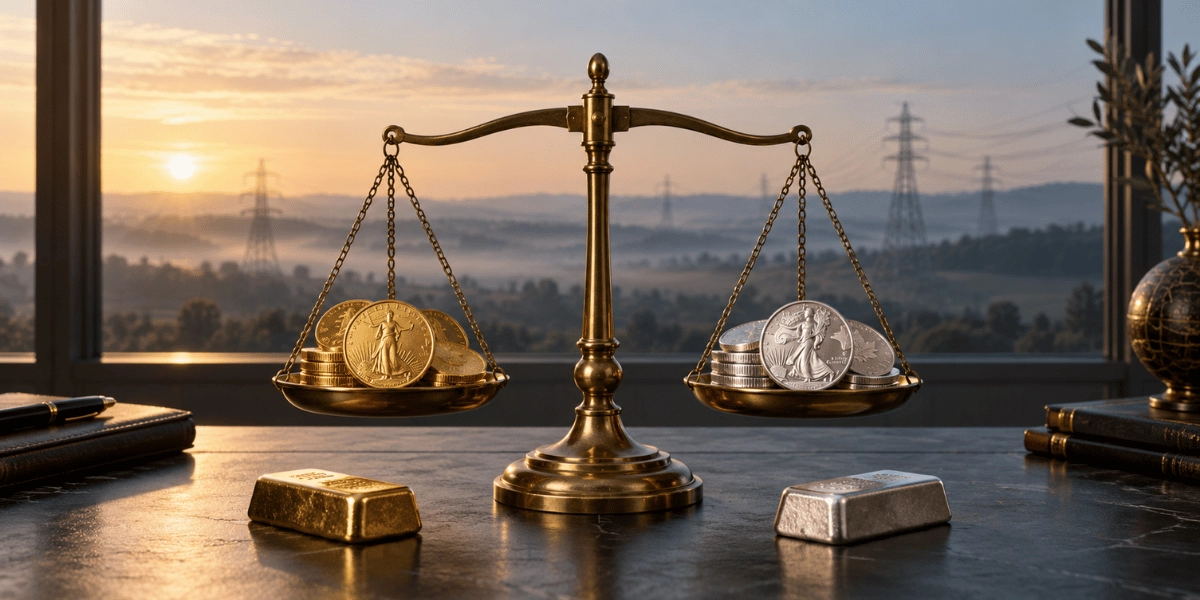
For individual investors, this environment raises the question of how to preserve the purchasing power of their savings. Both gold and silver can be considered in this context, but they are influenced by different factors. One may attract demand driven by a desire for protection; the other remains closely tied to industrial needs.
A rise in energy prices can thus support certain reasons for buying while weighing on economic activity. Understanding the possible reactions of these two metals requires distinguishing between investor demand, production costs, and central bank decisions. The French figure serves as a starting point, not a price forecast.
Key Takeaways from the Article
- In September 2026, consumer prices in France rose 3.1% year-over-year. Energy prices increased by 21.3%, according to final figures from INSEE.
- Gold may benefit from a drive to protect wealth, but rising inflation does not guarantee a rise in its price.
- Silver serves both as a precious metal and has significant industrial applications. Higher energy costs can increase production costs while weakening demand.
- The reaction of interest rates, the dollar, and the economic outlook matter just as much as the inflation figure itself.
- For holders of coins and bullion, the price in euros, premiums, and resale conditions remain key factors.
An energy shock is not limited to household bills
Higher fuel and gas prices reduce households’ disposable income and increase certain business costs. Transportation, manufacturing, and supply chains may be affected. The ECB describes this gradual pass-through of energy costs to other goods and services.
This cost-driven inflation can coexist with a slowdown in economic activity. Businesses must then choose between absorbing part of the increase within their margins, raising their prices, or adjusting their production.
However, the 21.3% figure reported by INSEE refers to energy consumed by French households. It does not reflect the energy costs of all businesses or those of global mining operations. The gold and silver markets respond to a range of international factors.
Gold May Benefit from the Search for Protection
When rising prices cause concern, some investors seek to diversify their portfolios with a tangible asset. Physically held gold is not backed by any promise of repayment from a government or a company. The World Gold Council highlights this absence of credit risk.
This characteristic can enhance gold’s appeal when inflation is accompanied by economic or monetary uncertainties. However, it does not guarantee that gold will retain its value in the short term. Gold pays no interest, and its price can fall, even as the cost of living rises.
It is therefore important to distinguish between a long-term diversification goal and immediate protection against higher energy bills. The price of gold does not automatically track the French consumer price index.
Interest rates can affect the expected response of gold
In the face of persistent inflation, central banks may maintain or raise interest rates to curb its spread. Interest-bearing investments then become potentially more attractive compared to a metal that does not generate income.
The real interest rate—that is, the interest rate adjusted for inflation—provides useful insight. The ECB explains this distinction between nominal and real interest rates. When making investment decisions, expectations of future inflation also matter.
If interest rates rise faster than expected inflation over a comparable time horizon, gold may come under pressure. Conversely, inflation that erodes returns further can support interest in the metal. And an inflationary spike alone is not enough to trigger a rise in gold prices: the dollar and growth prospects also play a role.
Silver is subject to two sometimes conflicting influences
Silver also attracts investors, but its industrial applications play a significant role. The World Silver Survey 2026 estimates industrial demand at 657.4 million ounces in 2025, accounting for more than half of total demand. Electronics, the automotive industry, power grids, and photovoltaics are among its primary uses.
Higher energy prices can increase the costs of mining, processing, and transportation. The report’s chapter on mining supply specifically mentions the expected pressure from rising oil prices on site costs in 2026. This constraint could weigh on margins and, if it persists, on certain production decisions. Gold mines also consume energy; the distinction between metals lies primarily in the drivers of their demand.
But industrial users are also facing rising costs. If their sales slow down, they may reduce their purchases or seek processes that use less silver. An increase in mining costs is therefore not automatically passed on to the metal’s price: the price also depends on demand.
It is this dual influence that sets silver apart. Its greater sensitivity to the economic cycle can amplify price fluctuations, even as investors turn to precious metals for protection.
What are the key considerations for a French investor?
The first consideration concerns the economic outlook. If uncertainty rises and growth slows, demand for a safe haven may favor gold, while silver suffers due to its industrial applications. If economic activity holds up and investment continues, industrial demand may, on the contrary, support silver. These mechanisms remain possibilities, not certain trajectories.
Next, investors should monitor prices in euros. Since both metals are primarily priced in dollars, a decline in the euro can make their value higher in French currency. The exchange rate effect can thus mitigate an international decline or amplify an increase.
Finally, the price of a coin or bar includes factors specific to the physical market. The premium over the metal’s value, storage fees, and the spread between the buy and sell prices must be examined before any purchase.
Two Metals, Two Roles in an Investment Portfolio
The energy crisis calls for a clearer definition of the expected role of each investment. Gold can contribute to diversification and provide protection against uncertainty. Silver adds industrial exposure, with generally more pronounced price fluctuations.
French inflation alone is therefore not enough to determine which of the two metals is the better choice. A well-reasoned decision takes into account the holding period, liquidity needs, and the risks already present in the portfolio. Preserving purchasing power requires this holistic view, rather than reacting automatically to the release of economic data.
Conclusion
In the face of energy-driven inflation, gold and silver respond to different dynamics. Gold may benefit from the search for wealth protection, but its performance remains sensitive to real interest rates and the euro exchange rate. Silver also depends on industrial conditions: higher energy costs can increase production costs while weakening demand. For individual investors, these metals can therefore serve complementary purposes, to be evaluated based on their investment horizon, tolerance for price fluctuations, and the terms for purchasing physical products.
By La rédaction Godot & Fils
Passionate and expert in the field of buying and selling precious metals, we put our expertise at your service to offer you in-depth analyses of gold and silver financial news. Driven by the desire to provide you with clear, reliable and relevant information, we ensure that each piece of content is both precise and concise. Our aim is to help you better understand market trends so that you can make informed decisions about your investments. Through our articles, we offer practical advice, decoding of major economic events and technical analysis to maximise your investment opportunities. Whether you are a beginner or an experienced investor, our content is designed to help you succeed in your precious metals investments. Follow us so that you don't miss out on any market developments and benefit from an expert's view of gold, silver and the economic dynamics that shape their value.
Receive the latest news by subscribing to the newsletter


 Zodiac Series : Scorpio 1 Oz Silver

 50 Mexican Pesos


