
GOLD, SILVER, PLATINUM, AND PALLADIUM PRICE CHARTS
How to read this gold price chart ?
This chart shows two essential elements:
- The horizontal axis (X) indicates time: a few hours, days, months or years depending on the chosen scale.
- The vertical axis (Y) shows the price of gold per kilogram in euros.
For an effective reading of the chart:
1. Choose the right period:
- Over a short horizon (1 day, 1 week), the chart mainly shows daily fluctuations.
- Over a long horizon (5 to 10 years), you can visualize the overall trend of the gold price.
2. Check the unit: make sure the scale corresponds to the format you use for your purchases (ounce, kilo, euros).
3. Identify highs and lows: peaks indicate areas where the market considered gold expensive; troughs, on the contrary, indicate periods when it was perceived as more affordable.
This provides an initial indication of market volatility.
How to analyze a gold price chart ?
The first step is to observe the overall trajectory of the curve:
- If it rises steadily despite a few temporary drops, the trend is bullish.
- If it declines with some rebounds, the trend is bearish.
- If it oscillates around the same level, the market is neutral or consolidating.
To deepen your analysis without being an expert:
- Underlying trend: compare the current price to its level 3, 5 or 10 years ago.
- Key levels (support and resistance):
- A support is an area where the price often bounced.
- A resistance is a level the price struggles to break through.
- Volatility: large gaps between highs and lows over a short period indicate a more nervous market.
These elements cannot predict the future but place the current price within its historical context: low, medium or high.
Can we predict a rise in the gold price using the chart ?
A chart is not a forecasting tool but an observation instrument. It allows you to:
- Identify past and current trends,
- Spot areas where the market often reacts (supports and resistances),
- Understand market rhythm: phases of increase, correction or stagnation.
But the chart cannot reliably predict future price movements.
The gold price also depends on major external factors:
- Inflation and interest rates,
- Central bank decisions,
- Economic or geopolitical context.
You can estimate probabilities (e.g., a resistance broken for a sustained period may suggest a continued upward trend), but never a certainty.
The chart is primarily a decision-support tool, not a predictive indicator.
How to use the gold chart for long-term investing ?
For a long-term investor, the chart mainly helps to optimize strategy:
- Identify attractive entry points: strengthen positions during pullbacks rather than at peaks.
- Smooth purchases over time: a strategy of regular buying reduces short-term volatility impact.
- Keep a long-term vision: gold is a safe-haven asset valued for its stability over several years.
Practically, you can:
- Compare the current price to its multi-year average,
- Take advantage of declines to increase your holdings,
- Avoid impulsive decisions based on very short-term fluctuations.
The objective is to integrate gold into an approach of diversification and wealth preservation.


 Zodiac Series : Capricorn 1 Oz Silver
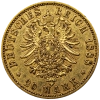
 20 Reichsmarks
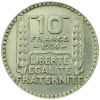
 10 Francs Turin 1929 - 1939


