
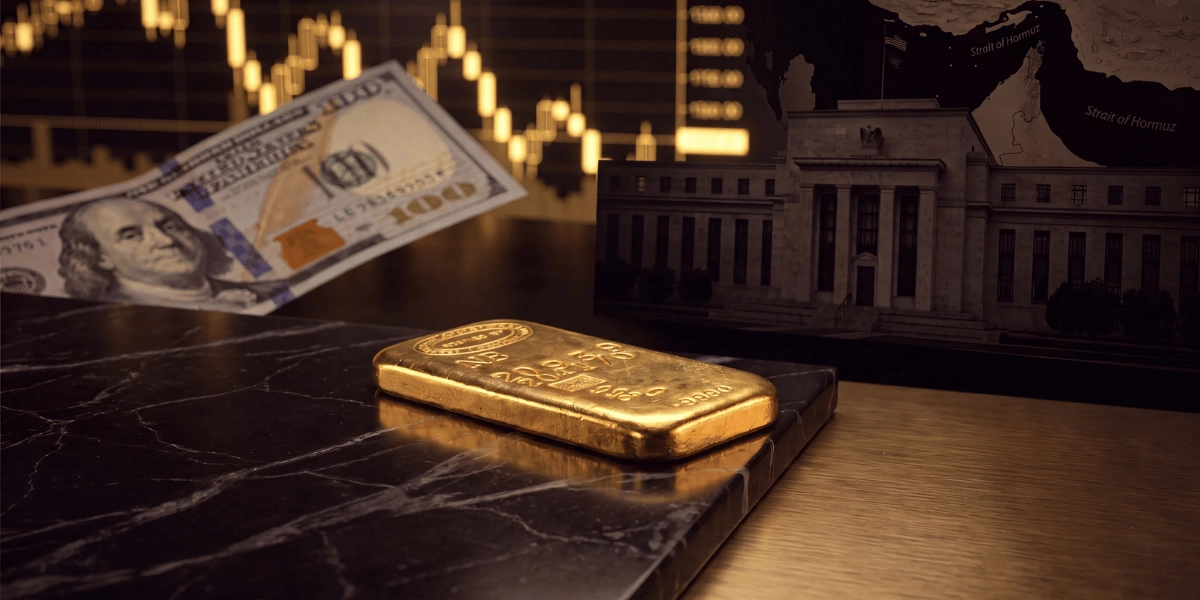
Gold’s Pullback Doesn’t Overturn the Real Signal
As of July 9, 2026, the most interesting development is not the decline in gold prices per se, but gold’s relative resilience despite a typically unfavorable mix of factors: a rebound in the dollar, rising expectations of U.S. rate hikes, and renewed military tensions surrounding Iran. According to Reuters, the spot price of gold fell to around $4,060 per ounce on Thursday morning, down from $4,123 the previous day and $4,140 on Tuesday. Silver fell further, to $57.77 per ounce on Thursday from $60.88 on Tuesday, a reminder that during periods of macroeconomic stress, it maintains a higher beta than gold.
This very short-term reversal stems primarily from the U.S. monetary policy message. On July 2, the Bureau of Labor Statistics’ jobs report showed only 57,000 nonfarm payroll jobs created in June, with an unemployment rate of 4.2%. This figure had initially supported gold prices late last week. However, the Fed minutes released on July 8 reignited the opposite interpretation: inflation is still considered broad enough to warrant a longer-term restrictive stance, while the federal funds rate was kept at 3.50%–3.75% at the June 17 meeting, according to the Federal Reserve. In other words, the market is shifting from a slowdown scenario to one of mild stagflation, which is historically more ambiguous for gold in the short term.
Silver: The Physical Market Tells a Different Story
Where the picture becomes less clear is with silver. The decline in the spot price masks physical tightness in Asia. According to Reuters, Indian import restrictions have sent domestic premiums soaring to $6.50 per ounce—more than 10% above the global benchmark price—even though they were still trading at discounts of up to $5.50 in May. Indian imports fell to 46.8 metric tons in May, down from 534.3 metric tons a year earlier. For an individual investor, this is a key point: a correction in the spot price does not necessarily imply immediate relief in the physical market if import flows stall.
The structural backdrop for gold remains favorable. The World Gold Council reports that central banks purchased a net 41 metric tons in May, including 18 metric tons by Poland and 10 metric tons by China. This official support doesn’t drive the market higher every day, but it does limit the depth of corrections. Meanwhile, on July 7, Hong Kong launched a trial of its new central gold clearing system, along with a revival of futures contracts and an explicit ambition to become a regional hub, according to the Hong Kong government. This is infrastructure, not just noise: the more clearing houses, storage facilities, and liquidity there are in Asia, the more physical demand can be organized outside of traditional channels.
What This Means for Investors
In practice, individual investors must distinguish between market prices and access conditions. For gold, the recent pullback looks more like a breather amid interest rate pressures than a fundamental breakdown. For silver, volatility remains more severe, but the pressure on premiums in India serves as a reminder that a metal can correct on the screen while remaining in demand on the ground. For a gradual accumulation strategy, the most rational combination therefore remains: gold for wealth preservation, and silver for more cyclical leverage—while accepting a significantly higher risk of price fluctuations.
News of the Week
The latest news item to watch this week: In France, about twenty pieces of jewelry worth several million euros were stolen on July 6 from the Lalique Museum in Alsace, according to Reuters. This isn’t a market event, but it serves as a useful reminder: when the value of metals and jewelry rises, the issue of physical security becomes a key concern once again. Over the next few days, three variables will be particularly worth watching: developments on the Iran-Strait of Hormuz front, the dollar’s trajectory following the Fed minutes, and silver’s ability to stabilize its physical premiums despite its spot price decline.
By La rédaction Godot & Fils
Passionate and expert in the field of buying and selling precious metals, we put our expertise at your service to offer you in-depth analyses of gold and silver financial news. Driven by the desire to provide you with clear, reliable and relevant information, we ensure that each piece of content is both precise and concise. Our aim is to help you better understand market trends so that you can make informed decisions about your investments. Through our articles, we offer practical advice, decoding of major economic events and technical analysis to maximise your investment opportunities. Whether you are a beginner or an experienced investor, our content is designed to help you succeed in your precious metals investments. Follow us so that you don't miss out on any market developments and benefit from an expert's view of gold, silver and the economic dynamics that shape their value.
Receive the latest news by subscribing to the newsletter



 20 Francs Napoleon
 Zodiac Series : Gemini 1 Oz Silver


