
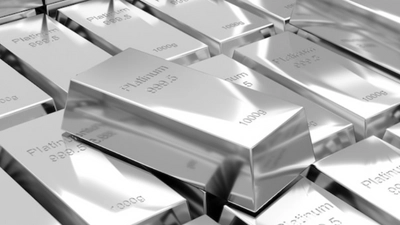
Each period of crisis or contraction in the world economy brings precious metals back to the forefront as economic players seek to secure their assets.
Platinum is no exception to this trend. Indeed, the price of this precious metal has experienced various fortunes since the beginning of the year. There are a number of reasons why the market price of platinum has fluctuated.
Here we explain how the market works and offer a forecast of the future of platinum in the precious metals market.

Platinum: supply dominated by South Africa and Russia
Almost all platinum reserves are concentrated in South Africa and Russia. This shows how strongly the platinum market is dominated by these two BRICS giants.
This also explains the ups and downs in the platinum market in recent months as a result of the contraction in Russian supply, largely due to the Russian-Ukrainian conflict.
Furthermore, the platinum market is strongly influenced by the automotive, chemical and jewellery industries, which consume almost all of its production. In addition, the market for platinum is dependent on the supply of recycling. Indeed, platinum is mainly used in the automotive industry, particularly in the manufacture of catalytic converters which reduce vehicle CO2 emissions.
What are the forecasts for the platinum market in a global context where the fight against global warming is forcing manufacturers to produce cleaner vehicles?
A market that remains on an upward trend
A more or less accurate forecast of the platinum market is the same as a more or less accurate forecast of the industries that directly impact on the supply and demand of the metal.
In the case of the automotive industry, there is one major reason why demand for platinum will fall sharply in 2022.
As a result, the continuing shortage of semiconductor chips has a direct impact on the supply of new cars from the industry. As a result, consumers are using their vehicles for longer and longer.
This notable fact also leads to a contraction in the supply of recycled platinum. This has fallen by around 20% by 2022.
In other platinum consuming industries, there is generally a significant contraction even though demand is increasing, particularly in the oil and medical sectors.
As a result, stocks remain stable in the jewellery sector. It should be noted, however, that the precious metal market remains in surplus in 2022 even though it is generally lower than in 2021.
In the longer term, forecasts are rather optimistic. With international pressure to reduce greenhouse gas emissions, platinum-consuming sectors are on a roll. For example, demand for platinum in the 'clean car' sector, where the metal is used in fuel cells, is expected to increase.
The same is true of hydrogen technologies. In sum, all forecasters agree that demand for platinum will remain strong and constant (around 10% per year) in the medium to long term. The platinum market has a bright future ahead of it.
By La rédaction Godot & Fils
Passionate and expert in the field of buying and selling precious metals, we put our expertise at your service to offer you in-depth analyses of gold and silver financial news. Driven by the desire to provide you with clear, reliable and relevant information, we ensure that each piece of content is both precise and concise. Our aim is to help you better understand market trends so that you can make informed decisions about your investments. Through our articles, we offer practical advice, decoding of major economic events and technical analysis to maximise your investment opportunities. Whether you are a beginner or an experienced investor, our content is designed to help you succeed in your precious metals investments. Follow us so that you don't miss out on any market developments and benefit from an expert's view of gold, silver and the economic dynamics that shape their value.
Receive the latest news by subscribing to the newsletter



 Sovereign
 250g Silver bar VAT Included

 1 Kilo Bar


