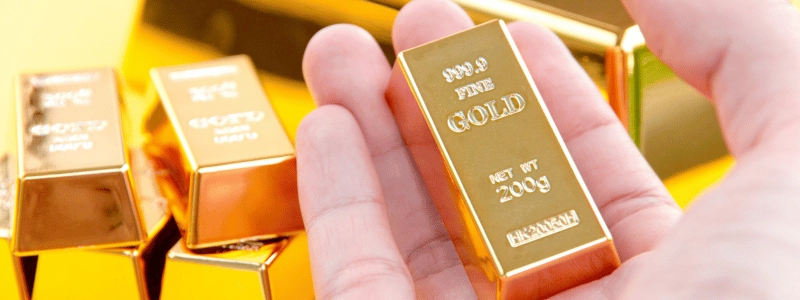
In our society, gold has two purposes: jewellery and savings. While the demand for gold in jewellery remains the main use of the precious metal, investment demand also represents a significant share of the market.
Among households, the tradition of gold is passed down through inheritance as much as through the desire to protect savings. The middle classes thus play a major role in the accumulation of gold, and this trend could intensify in the years to come.
The significant increase in the price of gold could lead to a shift in its image among the middle classes, placing it on the same level as a “luxury” or even “super-luxury” good.
SUMMARY OF THE ARTICLE :
- 1) The evolution of demand for coins and bars
- 2) Is Europe moving away from gold ?
- 3) The appeal of gold among the middle classes
- 4) Gold: what qualities for a household ?
- 5) Towards a great return of gold ?
1) The evolution of demand for coins and bars
Although there is no truly reliable estimate of the assets held by households, it remains clear that gold contributes to underpinning part of their savings.
Global demand for coins and bars grew by about +15% between 2014 and 2024, according to the World Gold Council. However, this trend is not uniform across countries. Over the same period, France would have gone from buying about 1 tonne in 2014 to selling more than 2.5 tonnes in 2024.
Conversely, Russia or even Egypt saw their demand for coins and bars quadruple. The trend is also upward in Turkey and, more broadly, in other Middle Eastern countries. In Canada, the United States and China, the increase is also noticeable, with acquired volumes increasing by 60% to 70% over the last 10 years.
It therefore appears that the criteria for buying gold with individuals are mainly related:
- To international tensions (as illustrated by the situation in the Middle East);
- To local tensions (observed, for example, in Russia or Turkey);
- To the increase in the standard of living (notably in China, Canada and the United States).

2) Is Europe moving away from gold?
Not all countries are following the same trajectory. Europe as a whole is experiencing a downturn in demand. Switzerland, in particular, saw its lowest level of coin and bullion purchases over the period. Part of the explanation may lie in exchange rates.
The fall of the euro in 2024 may have contributed to an implicit rise in the price of gold in euros, reducing household demand. Conversely, the dollar's strength may have encouraged some purchases denominated in US currency. Nevertheless, an underlying trend seems to be at work: despite the strength of the Swiss franc, domestic demand remains weak, a sign of something more structural than a simple exchange rate effect.
3) Gold's appeal to the middle classes
Numerous studies have highlighted "the curvilinear relationship between gold consumption and disposable income in emerging markets: as emerging markets mature and middle-class households' consumption baskets become more diversified and sophisticated, their gold consumption declines and then stabilizes".
The reasons for gold's appeal to the middle classes are manifold:
- Rising incomes and the desire to build up precautionary savings;
- Limited access to, or imperfect knowledge of, more complex financial assets;
- Cultural and historical factors, as well as political considerations in times of instability.

4) Gold: what qualities does it have for a household?
Stone and gold generally remain the tangible assets of choice for households. Whereas real estate can generate rental income, not without maintenance, tax and vacation costs, gold generates no direct income, but only limited, controllable costs, possibly linked to storage.
Gold can thus become a tangible asset accessible to middle-class households, without destabilizing the budget. The key lies in :
- A measured allocation, often 5-10% of financial assets;
- Gradual purchases to smooth the entry price;
- A pragmatic choice of media, with priority given to physical gold in the form of coins or ingots that are easy to resell. In France, of course, we find the famous Napoléon 20 Francs.
Even so, the real costs of premiums, storage and even management fees for non-physical media need to be identified in advance. Safekeeping also requires a minimum of method: safe, inventory, invoices.
5) Towards a comeback for gold?
The spectacular rise in the price of gold in recent years has reinstated the yellow metal as a prestige asset. The famous 20-franc Napoleon, which traded for around €50 around 2000, now fetches over €600. Similarly, a one-kilogram ingot has passed the symbolic €100,000 mark.
Such an increase in value can have two effects:
On the one hand, a gradual tightening of demand for jewelry, due to the rise in raw material prices ("negative elasticity");
On the other hand, the growing prestige of gold, whose rising value is reinforcing its appeal and symbolic weight in the eyes of households.
Gold's image could thus evolve over the next few years, gaining in prestige and appeal.
By La rédaction Godot & Fils
Passionate and expert in the field of buying and selling precious metals, we put our expertise at your service to offer you in-depth analyses of gold and silver financial news. Driven by the desire to provide you with clear, reliable and relevant information, we ensure that each piece of content is both precise and concise. Our aim is to help you better understand market trends so that you can make informed decisions about your investments. Through our articles, we offer practical advice, decoding of major economic events and technical analysis to maximise your investment opportunities. Whether you are a beginner or an experienced investor, our content is designed to help you succeed in your precious metals investments. Follow us so that you don't miss out on any market developments and benefit from an expert's view of gold, silver and the economic dynamics that shape their value.
Receive the latest news by subscribing to the newsletter


 Box Philharmonic

 Britannia 1/2 Once Gold