Gold holds a special place in the minds of savers. For a long time, it has been linked to stability, wealth transfer and a form of protection when markets become more uncertain. Likewise, it often appeals to people who want to diversify their assets without relying only on traditional financial products.
For a beginner, that interest is understandable, yet it quickly raises practical doubts. Should you choose physical gold rather than paper exposure? Can you start with a small budget? Does it still make sense after recent highs? And above all, how do you buy without making mistakes on format, pricing, storage or resale?
In reality, investing in gold as a beginner is not about finding the perfect timing or committing too large a share of your savings too quickly. It is mainly about understanding the role of this metal in a broader wealth strategy and then moving forward step by step. In other words, a sound first purchase depends less on instinct than on a few clear and lasting principles.
That is exactly the framework to clarify before taking action. By narrowing the focus to physical gold, the initial amount, the right format and the practical rules to know in France, it becomes easier to invest consistently, even with no prior experience.
Why physical gold deserves a place in a beginner strategy
Physical gold appeals first because it is a tangible asset. Unlike a simple portfolio line, it exists materially, which reassures many first-time buyers. In addition, it does not directly depend on the health of a company or issuer. Therefore, it can play a diversification role alongside equities, real estate or cash savings.
For a beginner, the goal is not to chase quick performance. The main benefit lies more in preserving purchasing power over the long term and in gold’s ability to cushion certain periods of stress. Nevertheless, that does not mean buying blindly after a sharp rise. Even after recent records, gold may still be relevant if you think in terms of gradual allocation rather than a short-term bet.
Before choosing a specific product, it is useful to distinguish the formats best suited to a first investment.
Coins or bars: which format is best to start with
Gold coins are often better suited to beginners. They allow entry with more accessible amounts while offering good flexibility if you later want a partial resale. Moreover, some investment coins are widely recognized by the market, which supports pricing clarity and liquidity.
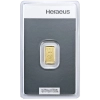
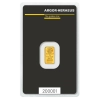
Bars, on the other hand, are more attractive to investors able to commit a larger budget. They may be relevant for concentrating significant value in a compact format, but they are less flexible if you want to sell only part of your holding. Thus, for a first purchase, coins often provide a more progressive approach, while small bars can be a compromise depending on the available budget.
This format choice naturally leads to two other practical issues: how much to invest and when to buy.
When to buy and how much to invest at first
There is no perfect timing that can be identified with certainty. Besides, waiting forever for a pullback may mean never taking action. For beginners, the most reasonable method is often to buy in stages. This smooths the entry price and reduces the emotional impact of records or temporary corrections.
You can therefore start with a small budget, provided you choose a recognized product and compare the premium, meaning the gap between metal value and purchase price. How much should you invest first? In practice, a first purchase should remain proportionate to your emergency savings and other projects. A modest but coherent amount is better than an excessive effort. Likewise, gold usually represents a measured share of total wealth: often a few percent and, depending on the profile, up to around 10%, rarely more for a beginner.
Storage, resale, scams and taxation: key points to master
Buying physical gold also means planning what comes after the purchase. On the one hand, storage must be secure; on the other, resale should remain easy. Between the two, scam prevention is essential.
To store gold, several options exist: keeping it at home under serious security conditions, using a bank safe deposit box or relying on a specialized custody service. The right choice depends on the amount held, the need for access and the level of protection sought. In addition, keeping invoices, seals when applicable and product references helps ensure smoother resale later on.
Reselling gold easily begins with buying recognized products from an identified professional network with clear traceability. It is also useful to review buyback terms before purchasing, because liquidity is part of investment quality.
To avoid scams, a few habits are essential:
- compare listed prices and premiums;
- check the seller’s identity and reputation;
- request clear documentation;
- be wary of guaranteed-return promises;
- favor standard market references.
Lastly, gold taxation in France should be understood before any resale. The applicable regime depends in particular on the nature of the asset sold and on your ability to prove the purchase price and date. Depending on the case, this may involve the precious metals tax or the capital gains regime for movable property when conditions are met. Therefore, keeping supporting documents is not a minor administrative detail but a central part of the investment strategy.

How much gold should gradually be part of your overall wealth
Ultimately, the right way to invest in gold as a beginner is to give it a clear function. Gold is not meant to replace every other investment, but to complement a broader mix built around safety, liquidity and the long term. Therefore, its share should remain aligned with your risk profile, investment horizon and overall level of wealth.
Within that approach, starting modestly is often the healthiest decision. It lets you understand how the market works, get used to pricing, test storage arrangements and learn about resale without excessive pressure. In addition, this gradual build-up helps maintain buying discipline, whether prices are hitting records or going through temporary pullbacks.
The answer to the initial question is therefore straightforward: to start investing in gold well, it is better to buy progressively, favor recognized physical products, keep all supporting documents and fit this investment into a measured allocation. Whether you begin with coins, small bars or a more structured purchase later, what matters most is consistency between your wealth objective, your budget and your level of knowledge. By returning to that idea of measured protection, gold finds its proper place: not as a speculative reflex, but as a durable diversification tool.
By La rédaction Godot & Fils
Passionate and expert in the field of buying and selling precious metals, we put our expertise at your service to offer you in-depth analyses of gold and silver financial news. Driven by the desire to provide you with clear, reliable and relevant information, we ensure that each piece of content is both precise and concise. Our aim is to help you better understand market trends so that you can make informed decisions about your investments. Through our articles, we offer practical advice, decoding of major economic events and technical analysis to maximise your investment opportunities. Whether you are a beginner or an experienced investor, our content is designed to help you succeed in your precious metals investments. Follow us so that you don't miss out on any market developments and benefit from an expert's view of gold, silver and the economic dynamics that shape their value.
Receive the latest news by subscribing to the newsletter


 American Buffalo 1 Oz Gold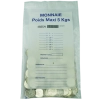
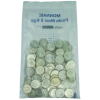
 1000 Coins 5 Francs Semeuse