
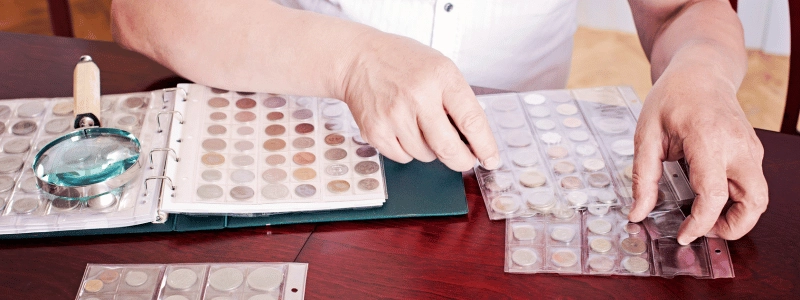
Starting a collection of ancient coins is certainly a fascinating process in terms of the historical aspect and the intrinsic value of the coin, but it is also a demanding task in many respects.
Faced with the appeal of numismatics and the soaring price of precious metals such as gold and silver, many newcomers to the art of coin collecting may wonder about the basic questions: "Where do I start, and what precautions should I take?
It's true that this niche market also attracts its share of scams and risky behavior. That's why it's so important to be aware of the main pitfalls, so as to build a collection that will last, right from the start.
ARTICLE SUMMARY :
- 1) Understanding the basics of numismatics
- 2) The pitfalls of fakes and counterfeits
- 3) The problems of cleaning, storage and conservation
- 4) Neglecting rarity and the market
1) Understanding the basics of numismatics
Before making any acquisition, it's essential to obtain information from recognized and accredited professionals. Numismatics isn't just about collecting old coins; it also requires a minimum knowledge of monetary history, coin specifications and, above all, market trends.
Among the elements to master, it's imperative to understand:
- the metal (gold/silver/alloy) determines part of the intrinsic value
- that the year and mint influence rarity and demand
- That the state of preservation is a central condition for assessing the value of a collector's coin.
The rarity of a coin also depends on several factors:
| Criterion : | Impact on value |
| Initial mintage: | The lower the number of copies minted, the rarer the coin. |
| Survival: | Some coins have been melted down or destroyed, reducing the number available today. |
| Market demand: | A coin much sought-after by collectors can see its price soar even if its mintage was high. |
| Variants : | Minting errors, rare workshops or specific vintages increase rarity. |
2) The trap of fakes and counterfeits:
The numismatic market inevitably attracts counterfeiters. Counterfeit money has been around almost as long as coins have been invented. There are two types of counterfeit coins circulating among collectors. Counterfeits for use and counterfeits for collectors. While the former may be of historical interest and even collectable, collector fakes can be extremely dangerous to the collecting world, as they are there precisely to deceive it.
The most common types of counterfeit
- MODERN COPIES: often sold online at low prices, these crudely imitate the originals, with a suspect weight and patina. They are generally casts of authentic pieces. Details are much less precise. These pieces can be found on online auction sites or in tourist markets, sold as authentic of course!
- ALTERATIONS TO AUTHENTIC PIECES: some authentic coins are modified to simulate rarity. For example, the date may be altered to simulate a rare year. Or it may be a crude addition of the word "trial" to a current coin.
- PLATED ALLOY IMITATIONS: This involves applying a thin layer of o or silver to a base metal, giving a deceptive appearance. There are even kits to gild pieces yourself.
How to recognize a fake?
A beginner - and even an expert - should always check the characteristics of a coin to assess its authenticity.
- Weight: any difference in weight that is too great should alert the collector. Compare with the different weights observed for the same piece recognized as authentic.
- Diameter: it should be within the average of commonly measured diameters. A large discrepancy may be suspect.
- Sound: the sound a gold or silver coin makes is specific. The ability to perceive a suspicious sound can be learned over time.
Good reflexes for beginners
Before buying a rare or expensive coin, it is advisable to :
- Compare several sources (catalogs, market prices, online examples).
- Be wary of "bargains": a piece offered well below its average value is almost always suspect.
- Focus on documentation: invoice or proof of purchase, certificate of authenticity, descriptive sheet (year, composition, origin, weight).

3) Cleaning, storage and preservation issues
The misconception of cleaning a piece
Many beginners think that a "shiny" piece is worth more. This is false, because a cleaned piece loses much of its value. In fact, cleaning erases patina and micro-details.
| Never do : | Prefer : |
|
- Use chemicals - Rub with a cloth or brush - Soak parts in "miracle" solutions |
- Leave the part in its original state - seek professional advice if the part is oxidized |
Careless storage and conservation
Poor conservation can degrade a piece within a few years and cause its value to plummet. To ensure optimal storage and conservation, you should :
- use numismatic capsules or cases
- Store coins away from light and humidity.
- Avoid strong temperature variations
| Practices to avoid : | Consequence: |
| - Store the piece in an untreated wooden box | - Risk of oxidation |
| - Direct contact with hands | - Grease deposits |
| - Stacking parts | - Irreversible micro-scratches |
4) Neglecting scarcity and the market
"A common piece is a good deal"... wrong.
- The risk of such reasoning is to own a collection that has little potential for value enhancement. You must therefore :
- Prioritize limited-edition pieces
- Keep abreast of trends through specialized articles, such as our article detailing all the reasons to collect old coins.
"The older the coin, the more valuable it is" ... false
- Some Roman coins, produced in millions, are very affordable today.
- Conversely, a XXᵉ century coin minted in very small quantities can be worth several thousand euros.

Consequences for the novice collector
Ignoring these criteria can lead to :
- Accumulating a lot of common coins with no real resale value.
- Spend too much money on easy-to-find coins.
- Miss the opportunity to acquire coins with high value potential.
To avoid this trap, you need to :
- Do your homework before every purchase
- Consult the catalogs and rarity indexes used by numismatists.
- Give priority to rare and limited coins, available on reliable sites such as those proposed on our website.
By Sébastien Gatel
Graduated in law and market finance, Sébastien has worked in financial institutions and wealth management for many years. At the same time, he contributes to various media outlets aimed at professionals and individuals, deciphering financial news and simplifying topics related to savings and investments.
Receive the latest news by subscribing to the newsletter


 Panda 3g Gold

 Box Maple Leaf
 100 Coins 5 Francs Semeuse


