
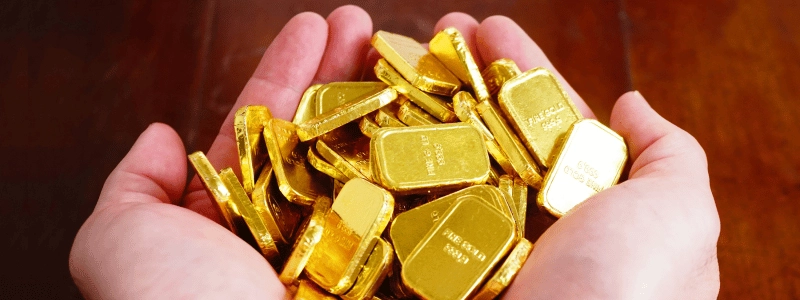
The question of passing on one's assets to loved ones is always a delicate one. Among the assets you may wish to pass on, physical gold (in the form of coins, bars or ingots) occupies a special place.
A safe-haven asset par excellence, it is often passed down within families from hand to hand, between generations (notably to children or grandchildren).
But in a context where gold is attracting the attention of many French people, it makes sense to look at this topic in the light of gifts or inheritance.
So, how do you give gold away within a legal framework? What are the risks, the benefits, and above all the tax rules to be aware of to avoid unpleasant surprises?
Here's everything you need to know about gold gifts and inheritance, so you can pass on this precious metal with peace of mind.
ARTICLE SUMMARY :
- 1) Donating gold: yes, but within a strict legal framework
- 2) Taxation applicable to a gold donation
- 3) Advantages and disadvantages of a gold donation
- 4) What legal rules apply to inheritance?
- 5) Best practices for passing on gold
1) Donating gold: yes, but within a strict legal framework
Giving a gift to a relative, friend or acquaintance is not a trivial act. When it comes to donating gold bullion, ingots or collector's coins, it's above all a legal act of inheritance. It is therefore strictly governed by the Civil Code and the General Tax Code.
What types of gold can be donated?
You can donate any type of physical investment gold, including :
- Listed gold coins, such as the 20 francs Marianne Coq
- Foreign coins, such as the Mexican 50 Pesos
- Ingots and bullion bars, such as the 10-gram bullion bar
Whatever the product or physical gold being donated, it must meet the criteria for investment gold. These include purity above 995 thousandths for ingots, 900 thousandths for coins, minted after 1800, and with an official published price.
What legal form should the donation take?
There are three main possibilities:
- The manual donation, which consists of handing over the gold from hand to hand, without a notarial deed. This donation is valid, but must be declared to the tax authorities using CERFA form n°2735 within one month of the gold being transferred to a third party.
- The "Présent d'usage" (customary gift) is offered on the occasion of a special event. The value of the gift must be proportionate to the donor's assets.
- Donations by notarial deed. This legal act ensures legal certainty and can help to anticipate conflicts between heirs. This legal procedure is particularly recommended for large sums.

2) Taxation of gold donations
In the same way as for the donation of a sum of money, under French law, there are tax rules applicable to all types of donor and donee.
Tax rates according to relationship
Taxation depends on the relationship between donor and donee:

Source: article 779 of the French General Tax Code and Service-Public.fr.
3) Advantages and disadvantages of a gold donation
Here's a summary of the advantages and limitations:

4) What legal rules apply to inheritance?
It's not uncommon for elderly people to have gold coins or silverware at home, or bullion at the bank, when they die.
What's special in this case is that gold (in whatever form) is included in the estate assets. Its presence must be declared and valued when calculating inheritance tax.
Is gold easy to transfer on death?
It's relatively easy to pass on gold, but there are a few prerequisites:
- Proof of origin (purchase invoices, inventory, previous declaration...)
- Register it in the declaration of inheritance(form n°2705)
- Value it at the official gold price on the day of death.
What happens in the event of possession of undeclared gold?
Firstly, in the event of deliberate omission or incomplete inventory, the heirs are liable to a tax reassessment, with a penalty of up to 80%.
Secondly, the tax authorities may reconstitute the assets of the estate if they suspect that assets have been concealed. So it's best to plan ahead:
- With a notarized inventory
- Or by gradual transmission via declared donations

5) Best practices for transmitting gold
To optimize the transfer of gold, here are a few practical tips:
- Prepare the donation with a professional, especially if gold represents a significant part of the estate.
- Split gifts over time, every 15 years, to maximize tax allowances
- Use tax-exempt family gifts if you meet the relevant conditions
- Keep all purchase invoices, certificates and proof of ownership
- Consider taking out insurance or a safe-deposit box contract, to secure your holdings before passing them on to your heirs.
Conclusion
It is perfectly legal and tax-optimized to pass on your gold, as long as you comply with the rules governing declaration, correctly value the assets and plan the donation or inheritance methodically.
Whether it's a question of manual donations, notarial deeds or estate planning, the yellow metal remains a reliable vehicle for intergenerational inheritance, provided that you have the right support.
By Sébastien Gatel
Graduated in law and market finance, Sébastien has worked in financial institutions and wealth management for many years. At the same time, he contributes to various media outlets aimed at professionals and individuals, deciphering financial news and simplifying topics related to savings and investments.
Receive the latest news by subscribing to the newsletter


 Britannia 1/4 Once Gold

 Bitcoin 1 Ounce Silver

 10 Francs Napoleon


